July 8, 2025 | Career, Product Discovery
Shift How You Think
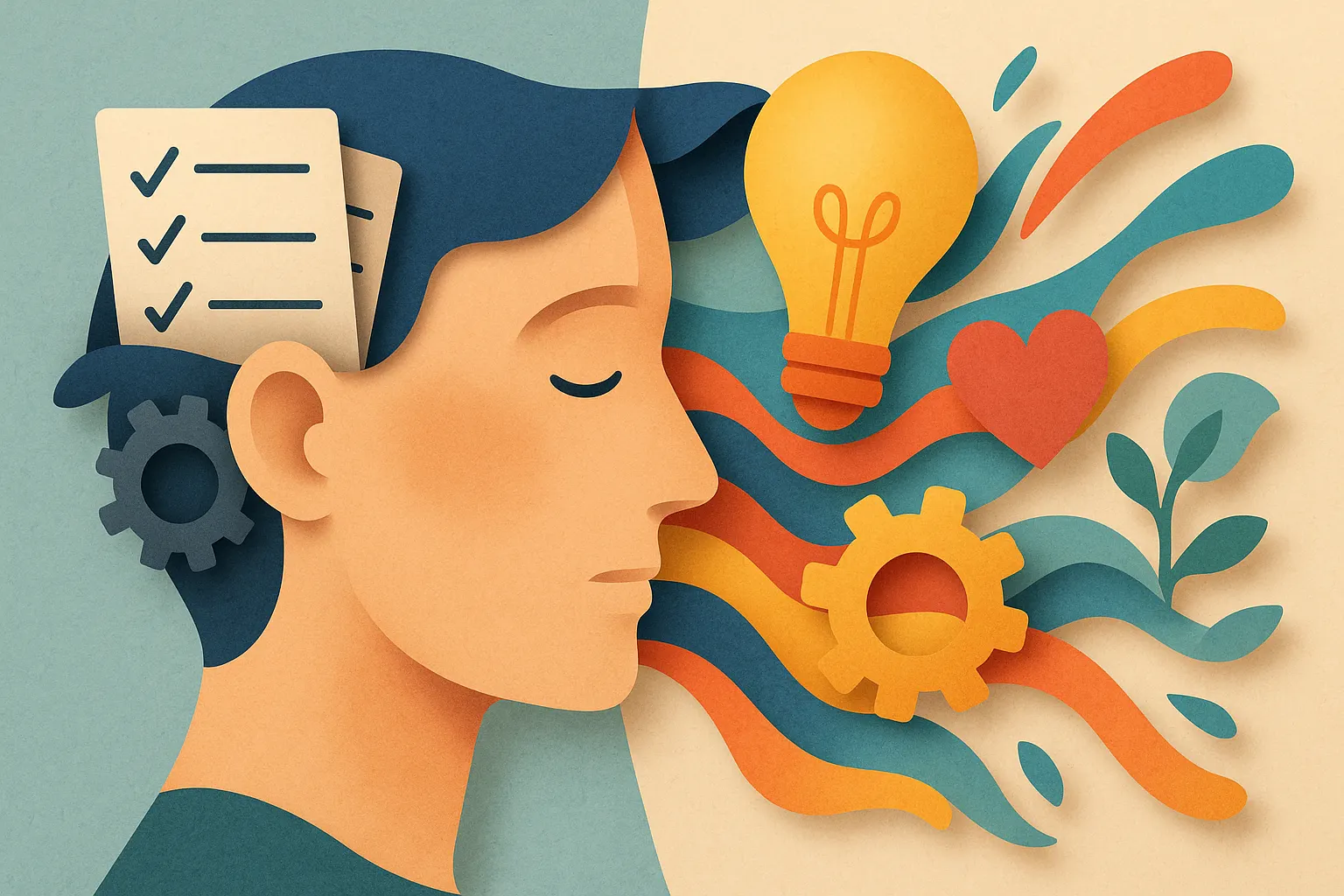
Shift from feature factory to product thinking: focus on outcomes, not outputs. Build what matters, because your customer does.
Product isn’t about shipping features — it’s about shifting minds, starting with your own.
— Kristy Sullivan
Let’s be real, it’s way too easy to slip into feature factory mode. If someone asks for a feature, you build it and move on. Rinse and repeat. I see it all the time, and I get it. You’re trying to keep up. But that’s not product thinking.
To build products that truly matter, you must shift your perspective. You need to adjust your approach to work.
What it is
Product thinking means:
- Putting the problem first.
- Chasing outcomes instead of outputs.
- Staying anchored in learning.
It’s about driving meaningful behavior change for customers, change that also creates long-term business value. And you do that with an empowered, continuously learning team, not a waterfall checklist.
At its core, product thinking asks:
- What change do we want to see in our customers’ world?
- How will we know if it worked?
That’s the shift. No more building because someone asked. Build because it
How to do it
These six mindsets show up again and again in Continuous Discovery Habits by Teresa Torres, and they make sense. If you want your trio (Product Manager, Designer, Tech Lead) to break out of the feature factory, these habits will help you.
1. Outcome-Oriented
Measure success by the impact you have, not by the features you ship. Focus on behavior change. Instead of tracking, “We shipped a new messaging tool,” ask, “Did first-contact resolution rates improve?”
How a Trio Acts
- Defines success by customer behavior change
- Connects metrics to outcomes, not outputs
- Ask, “What will be different for the customer?” before committing to build
💡 Tips
- Start every trio conversation with “What behavior are we trying to change?”
- Rephrase stakeholder requests in outcome language, for example, “add a chatbot” becomes “reduce checkout drop-offs, right?”
2. Customer-Centric
Put the customer at the center. Always. Understand their world, their pain, and their goals. Don’t patch a broken flow with a button; fix the flow itself.
How a Trio Acts
- Regularly interviews customers
- Share customer quotes and observations.
- Ask, “Is this truly valuable for them?” before building.
💡 Tips
- Play short video clips from user interviews in standups
- Rotate who takes notes so everyone hears directly
- Share real quotes in demos to keep reality front and center
3. Collaborative
Product thinking is a team sport. A trio should discover and deliver together, no tossing requirements over the fence.
How a Trio Acts
- Shows up together for interviews, mapping, and experiments
- Make time for brainstorming together
- Shares ownership of the problem and solution
💡 Tips
- Block a weekly discovery working session
- Try “crazy 8s” sketching together to expand ideas
- Rotate ownership of small experiments
4. Visual
Get what’s in your head out onto a board. Humans process visuals faster than walls of text. Sketches, diagrams, and flows help you align faster.
How a Trio Acts
- Sketches, maps, and prototype ideas
- Keeps an opportunity solution tree visible and updated
- Uses visuals instead of long documents
💡 Tips
- Summarize journeys visually
- Post opportunity trees in a visible team spot
- Swap bullet lists for quick sketches whenever possible
5. Experimental
Think like a scientist. Write down assumptions. Test them before you build. Don’t invest in a loyalty program if you haven’t even checked whether customers want rewards.
How a Trio Acts
- Lists risky assumptions early
- Design fast experiments
- Documents and shares what they learn
💡 Tips
- Keep a living assumptions log with the riskiest items in red
- Celebrate learning, even if it means killing an idea
- Use a “show your receipts” mindset: back ideas with evidence
6. Continuous
Discovery is not a phase. It is a habit. Talk to customers every week. Keep your opportunity list alive. Test constantly so you don’t get blindsided by change later.
How a Trio Acts
- Talks to customers weekly
- Protects discovery time, even while delivering
- Updates opportunities as they go
💡 Tips
- Schedule a recurring discovery slot weekly
- Use a simple discovery board to track what’s live
- Celebrate learning moments to keep evidence front and center
Key Takeaway
If you want to build a real product, stop chasing features and focus on outcomes. Great teams solve customer problems together, measure behavior change, stay visual, test assumptions, and keep discovery rolling week after week. That’s how you build what matters and skip the wasted effort.
Make the Shift Stick
Shifting to product thinking is not a one-time move. It’s a habit, a loop of learning, testing, and refining to understand what customers truly need.
Start small. Pick one mindset and try one tactic, then build from there. Talk outcomes. Share authentic customer voices. Protect time to explore, test, and reflect.
Your trio working together is the heart of product thinking. Stay aligned on what change you want to see in your customer’s world, and measure whether you made it happen. That is how you build products and teams that matter.
Fun Examples
Each one of these examples walks through the six mindsets.
Home Movie Night Organizer
- Customer-First: Families or friend groups who argue over what to watch
- Focus on Outcomes: Help them agree on a movie quickly; 80% of groups agree within 5 minutes
- Value Exchange: Less arguing, more movie time; streaming partners could sponsor
- Feasibility & Differentiation: Voting tools are feasible; group-focused, not individual-focused
- Team & Context: PM, designer, engineers, maybe partnerships
- Continuous Discovery: Test if arguments go down; add filters like “kid-friendly” or “no horror” if needed
Virtual Closet Organizer
- Customer-First: Fashion-conscious people who want to use more of their closet
- Focus on Outcomes: Increase wardrobe rotation by 30%
- Value Exchange: Save money, rediscover clothes, monetize through affiliate links or style coaching
- Feasibility & Differentiation: Feasible via photo uploads and tagging; focuses on reuse, not shopping
- Team & Context: PM, designer, engineers, stylist, or resale partner
- Continuous Discovery: Interview blockers to wearing items; suggest outfits or reminders to increase confidence
Pet Playdate Matcher
- Customer-First: Dog owners who want their pets to socialize
- Focus on Outcomes: One playdate per month; outcome is happier, healthier pets
- Value Exchange: Social pets meet friends; monetize via premium matching or local pet ads
- Feasibility & Differentiation: Uses basic map tech plus pet profiles; dog-focused, not people-focused
- Team & Context: PM, designer, engineers, dog trainer, or vet for trust and safety
- Continuous Discovery: Explore safety concerns; add verification features and reviews
Conclusion
If you want to build a real product, stop chasing features and focus on outcomes.
Great teams solve customer problems together, measure behavior change, stay visual, test assumptions, and keep discovery rolling week after week. That’s how you build what matters and skip the wasted effort.
Take Action
- Block time to define the problem before talking about solutions.
- Write down what customer behavior you want to change.
- Discuss as a trio how you’ll measure that change and pick one clear metric.
- Review past features and ask, “Did these actually change customer behavior?”
- Challenge stakeholder requests by asking, “What outcome are we chasing?”
- Schedule a weekly learning review to share what’s working, what’s not, and what you’re questioning.
- Capture one risky assumption before you start designing, and agree on how you’ll test it.
- Talk about “problem-first” thinking in every trio sync. Make it a habit.
- Share one product-thinking article or podcast every month.